 Posted by

Stretching a thousand kilometres along its southwestern edge, the Turkish Riviera is one of the world’s great natural attractions. Popularly known as the Turquoise Coast for its radiant blue waters, every great Mediterranean civilization since the Stone Age has lived and died here. Until the end of the Greco-Turkish War 99 years ago, the region was almost entirely occupied by Greeks.
The section between the popular modern beach and binge drinking resorts of Fethiye and Antalya was the ancient realm of the ancient Lycians. Here the western Taurus mountains drop a thousand metres directly into the sea. Hand-hewn terrace farms slowly give way to modernized holiday homes and campgrounds. But goats, sheep and herders can still be found winding their way slowly around the thickets and hedgerows. Stands of blue or white beehive boxes hum gently in the cool winter air.
In our little Renault Clio, we explored the ups and downs and backroads of this fascinating region. We took a week and needed a month.
Dalyan
A black-hole of historical drive-by tourism inexorably drawing in coachloads of foreigners for a trip on the river to see ancient tombs, soak in hot springs, and worry the sea turtles. It was so quiet the town decided to dig up the main road and repair the sewers. All boat trips were half price.


Fethiye
With a fine natural harbour and mountains of pine trees, it’s easy to understand how Fethiye became a marine centre. Here the shipyards still hand build Gulets, large motorsailing yachts, in both traditional and modern designs. More recently, tourism brought in paragliding, guided ecotours, and all-night discos to help diversify the economy. The city is especially popular with Brits and Russians. ATMs dispense cash in lira, dollars, euros, and pounds – but not roubles. Even ATMs have a line which they will not cross.


Olüdeniz
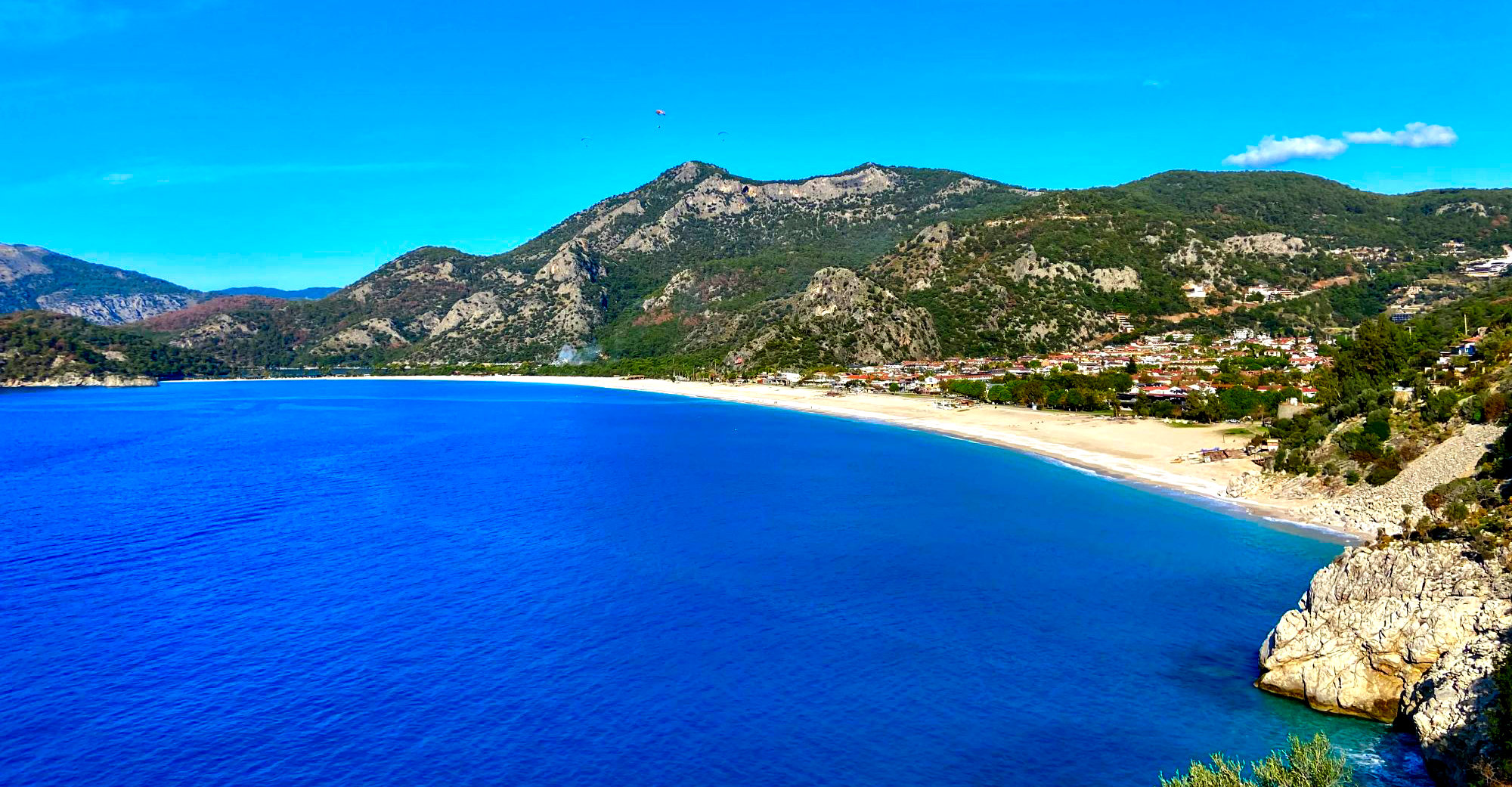
This hippie beach enclave in the throes of 21st century modernization is best known as the landing spot for dozens of daily paragliding flights. Even Carol took to the skies for her first lesson. Once down, pilots and passengers can lounge on the beach, or slam shooters in a lounge along the front.
Head east out of town along the cliff road and you’ll come to Butterfly Valley where you can pick up the Lycian Way for a 520-ish kilometre hike to Antalya. Designed by a Brit, of course, the tour officially starts in Fethiye and has become a must-do for serious hikers around the world. The short 12km stroll we took was stunning.


Kaş
Once a tiny Greek fishing village, Kaş was discovered first by the Germans, then the Brits, and most recently the Chinese. Modern condos now loom over the harbour. All the inevitable trappings of tourism fill the narrow streets of old town. Sailors are catered for in a thoroughly modern marina just over the isthmus. Look south across the bay and that island less than six kilometres away is still part of Greece. Regular flights to Kastellorizo from Athens and ferries to Rhodes ensure it stays that way.


Ample-theatres
Now in the thick of history, every 15km brings you to another ancient site. Each with an amphitheatre that would make Thespis blush with pride. Entertainment then, as now, was clearly big business. We poked around Letoon, which amongst its large treasures stood a stone with the same (administrative) message carved in three languages, Lycian, Aramaic and Greek. Like the Rosetta Stone, it helped historians decipher the Lycian language. The next day we took in Meyra. Another site with a big amphitheatre and the best collection of royal tombs carved out of rock in the country. The grave robbers had a field day.


Demre
December 19th on the Russian Orthodox calendar is the feast of St. Nicolas the Miracle-Worker, aka. Santa Claus. As keen followers of www.orthodox-cal.ru, we woke early and hotfooted our way to Demre for a moment with St. Nick in his basilica. We arrived about 20 minutes late for the singing and incense.


Antalya
Ancient seaport, modern city. Insane numbers of people (13+ million) visit this sun-bleached metropolis each year in normal times. For us, finding a cheap room with character inside the old city walls a week before Christmas proved no hardship. This place has been so cool for so long, even Emperor Hadrian visited and left a triumphal gate. Having recently built a wall in wet, dreary Brittania, you can understand his desire to get jiggy in the sun.
Just outside the city a couple of nature parks promise a bit more than they deliver. Our walk through the dank, chilly undergrowth reminded me of late winter in the woods of Ontario. (It’s a longer story than we have time for here.)
We finished our tour with a stay in a hotel teetering on a mountainside overlooking the city. Chilly weather kept us out of the pool and in front of a roaring fire. Our host served us the best grilled seabass we’d had since we arrived in Turkey.


Another great article
Love the pictures
Thanks Mark! We feel very lucky to be out and about and enjoying all this!
looks like you have been having a great trip! Thanks for sharing the photos as we haven’t been that way yet on the coast – giving us an idea of what we have ahead of us!
Thanks Janice. It’s a beautiful part of the country and feels very different from the western half.