 Posted by
Position: 37°08’57″N 38°47’22″E
Fans of 1960s epic films are familiar with two of the greatest cuts in cinema history. I’ll give you a second to consider which ones you think I’m referring to. […..] If you said the moment early in Lawrence of Arabia when Peter O’Toole blows out a match and the scene cuts to sunrise in the desert, supported with rousing music by Maurice Jarre, then you’re halfway there.

For my second candidate I’ll give you a clue, Stanley Kubrick. There is no doubt that Kubrick was both influenced by and competing with David Lean. The question on his mind during the production of 2001: A Space Odyssey must have been, how do I out-Lean Lean? Not only in sweep and grandeur, but in the finer details? How do I top Lawrence blowing out that damn match? The answer was, of course, a monkey, a monolith, a bone, and an orbital nuclear bomb – all underscored by Richard Strauss’s jaunty Blue Danube Waltz. Start at the dawn of weapons and cut to their ultimate incarnation. Nice work, Stanley (and Arthur).
I bring this up because inside of three days we walked around the world’s oldest monoliths and came close to understanding how the Ottoman Empire fell apart in the 1920s. In this post I’ll address the monoliths, then tackle the Ottomans in the next (but one).
Şanlıurfa
Fortified by internet research in support of our newly found passion for pigeons, we discovered the centre of Turkish pigeon keeping is Şanliurfa [1]. There, the Grand Mosque watches over the central park, a stone’s throw from old town. Pigeons cluster in the courtyard, fat and happy with the attention plenty of food brings.

POND
We learned the Prophet Abraham (Ibrahim in Islam), one of several characters who transcend Judeo-Christian-Islamic teachings, hailed from Urfa. And, depending on your religion, he is also buried there in a cave beneath the mosque. Nearby, on the northwest side of the park, is Balikli Göl, the sacred pool of Ibrahim.
As a young man, Ibrahim called for an end to idolatry. King Nimrod disagreed and had him cast from an upper storey window of his palace onto a waiting pyre. But before the flames could consume our hero, God turned them into water and the coals into fish.
Thus, the pool remains an important holy site for devout Muslims. The fish are protected, with heinous punishment for those that attempt to steal them. For a few lira you can feed them, and many do, causing a turbid frenzy in the water. Satisfyingly, you can make the fish almost as frantic by reaching an empty hand out over the water and let Pavlov do the rest.


Bazaar

We made our way towards the ancient centre of the city and entered the bazaar. A warren of twisting narrow lanes stacked high with goods of all kinds soon confounded us. The only directional indicators are minarets standing high above the market’s perimeter. Merchants learned the value of clustering goods centuries before America got auto-malls. A left turn takes you past rows of shoe sellers, a right along a clutch of hammered copper kettle workshops. One alley is soap and detergents, another bridal dresses and accessories. Every price is negotiable and lower than the big box stores.
The remarkable thing about all this commerce is the sheer amount of it. Not only in the bazaars, but out on the streets, too. Like most countries, malls sit on the edges of towns. But city centres in Turkey are active, busy places. How many independent cell phone retail and repair stores can survive? Dozens and dozens by the looks of it. No one is getting rich, but they all seem to eke out enough to keep the lights on and pay for deliveries of hot tea.


HISTORY
The dreary weather and short winter days meant that pigeon training wasn’t going to happen. Instead, we visited two local museums, the first one stuffed with Neolithic goodies, the other with mosaics. The mosaics were fantastically presented under a huge dome that gives you a grand sense of scale. Not quite as jaw-dropping as Hatay’s, it was still definitely worth the visit.
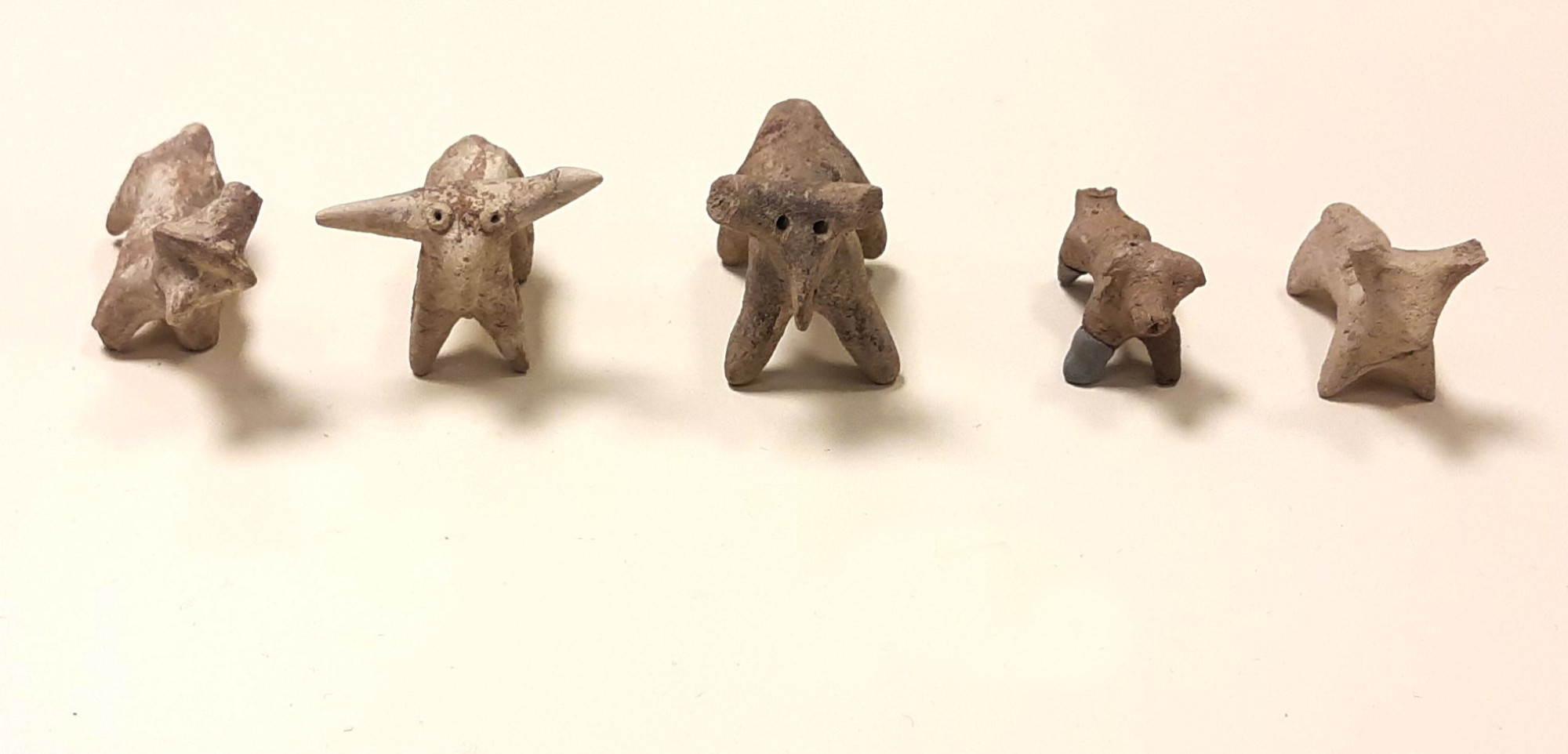
The archaeological museum does a wonderful job taking you through the history of Mesopotamia right up to the Roman era. With dioramas, full scale reproductions, and hundreds of carefully selected artifacts, each major phase of cultural development in the region between 20,000BCE to 100BCE was ably represented. The museum also had just the right amount of stuff on display. Enough to give you a real sense of life in each epoch without overwhelming you with data.


LITTLE RASCALS
With many restaurants closed for the season, or the pandemic, searching for lunch that afternoon proved frustrating. After one failed attempt in a quiet side street, we bumped into a young lad carrying a pigeon in his hand. The bird looked like it was being severely manhandled, but its expression was serene, as though being carried in this kid’s fist was much better than flying.
Another 100 metres up the street five urchins, none more than eight years old, had all kinds of questions for us. With big black eyes and a broad smile the smallest and brightest, a little girl, took a shine to Carol. She reached up and took Carol’s hand, talking a mile a minute with even a few words of English thrown in. When we reached the corner, the whole gang broke off in a rush of giggles and squeals.
GÖBEKLI TEPE
Among the earliest settlements in the region is Potbelly Hill. Almost 7,000 years before Stonehenge was even on the drawing tablet, Göbekli Tepe was up and running. Theories about what this site was range from a meeting house for a small community, to a cathedral for a death cult.
The site’s big central stone pillars, the monoliths, are recreated in Sanlirufa’s archaeological museum. That gives you a sense of scale you can’t get by looking down on them from the observation platform. The fibreglass reproductions prepare you for your visit to the real thing by showing you what to look for. The simple fluid forms of the animal carvings on the monoliths give them an artistic flair the big slabs at Stonehenge lack. Foxes were a favourite motif, but ducks, cranes and big cats can also be seen.


By the end of our visit, we’d mentally redefined our understanding of the terms ‘old’ and ‘antique’. The Greeks and Romans are recent history, America turned up two days ago, and we are mere zygotes.
[1] Şanlıurfa was simply Urfa until 1923. For its role in the War of Turkish Independence, the city was honoured with the title of Şanlı, meaning ‘glorious’, by Kemel Attaturk.


