 Posted by
Position: 33°36’17.9″N 7°37’13.3″W
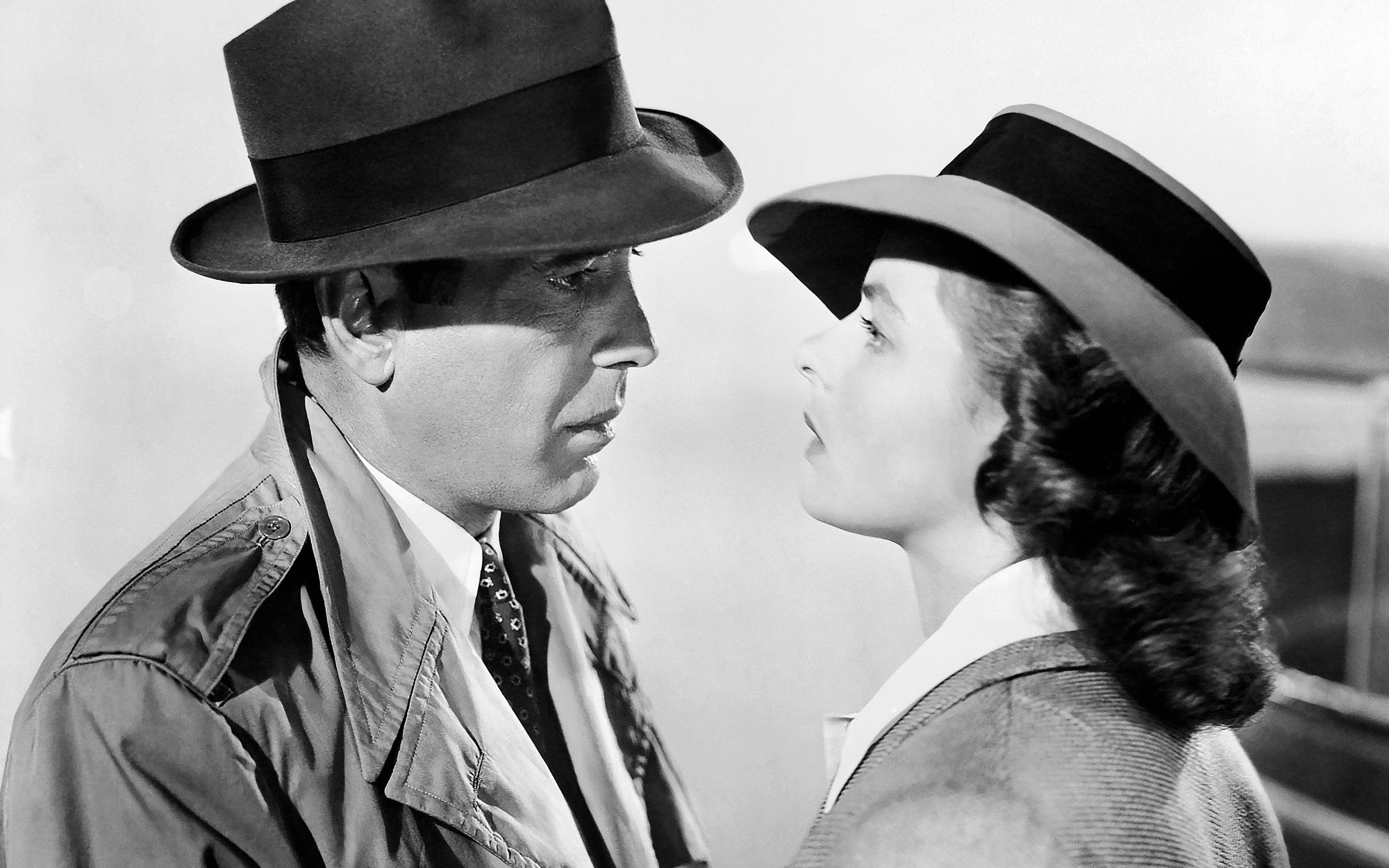
Querying three different AI models on who should play the lead roles in a reboot of Casablanca, arguably the greatest movie of all time, Oscar Issac’s name came up consistently for the role of Rick. I can see Issac successfully tackling Humphrey Bogart’s ghost and wrestling him to the ground.

The question of who should play Ilsa was a bit more controversial, but I think Margot Robbie would do a fine job stepping in for Ingrid Bergman. Rami Malek would take on Peter Lorre’s Ugarte, while Michael Fassbender would fill Paul Heinried’s shoes as Laszlo. Major Strasser? I’d cast Benedict Cumberbatch. Captain Renault? Claude Rains is a tough act to follow, but perhaps Martin Freeman would bring the necessary balance of wit, arrogance and obsequiousness to the role. Lastly, I’d have Vince Vaughn tackle Sydney Greenstreet’s Senor Ferrari. That leaves Sam, played by the incomparable Dooley Wilson. IMHO only Jamie Foxx could bring an appropriately sharp edge and singing chops to an updated role.
Now that it’s cast, what else would need changing? In this day and age, the original is patently male dominated and as white as rice. It is a war film, after all. So, rather than dick around with the script, why not update the film and bring it forward for another four generations? Of course, that means Robbie would have to carry the entire thing as Bergman did, but she’s clearly up to the task.
Fizzes
Let’s step off the Hollywood trolley for a moment. The original movie was made in Burbank, with a few exterior shots at Van Nuys airport. Not an inch of film was exposed in Morocco. That means Rick’s Café Américain also never slung gin fizzes in Casablanca. That is until Rick’s Café Casablanca opened there in 2004. Since Rick’s never existed, you can’t call Rick’s Café a reboot.
The restaurant was the brainchild of Kathy Kriger, a former US diplomat and commercial attaché to Morocco. We found out about it when our family friend Nancy Reynolds told us she was a founding investor in the venture. I’m sure her stake paid off well when the original owners sold out a few years ago.
When we pulled up there were two queues outside, one for those with reservations and one for those without. Carol had dropped Nancy’s name when she booked our table and we snagged one of the best seats in the house next to the piano. Around the time we ordered dessert, the pianist entered wearing a Fedora and opened with his rendition of ‘As Time Goes By’ and went on to serenade us with well rendered light jazz.


Riad

The atmosphere is authentic Moroccan riad. A riad is a traditional form of Moroccan architecture where a two or more storey house surrounds a rectangular garden or courtyard. If you’re well travelled and old enough, cast your mind back to the huge indoor atriums of hotels in the 1990s. Think of riads as the prototypes. Everyone wants ‘authentic experiences’ these days and staying at a riad is high on the list.
Originally constructed in the 1930s, Rick’s was completely renovated and a roof put over the courtyard. Still, it retains its original layout to good effect. Best of all, unlike so many tourist destinations, the food (sea bass with curry sauce for Carol and a steak for me) didn’t disappoint or break the bank. We toasted Nancy’s memory with a Chateau Roslane Premier. A was very drinkable Moroccan chardonnay from the North Atlas mountains near Meknes with an AOC (the designation, not the Democrat).
First World Wine
Morocco’s climate has supported viticulture for centuries. The Atlas Mountains run through the middle of the country and their north facing slopes and varying altitudes provide all manner of grape growing opportunities. While finding a place to serve you a vin ordinaire with your tajine is rare anywhere outside the most popular tourist destinations, the country is by no means teetotal. Nowadays, most large Carrefour supermarkets house a discreet section for buying wine, beer and spirits. Smaller, independent liquor stores can be found in all the major cities. Prices are competitive with Europe.
Nighttime in the Souk
Deciding to walk off our meal, we turned right out of Rick’s and a couple of hundred metres later entered the medina. It was 9:30PM and we weren’t sure what we’d find in the densely packed streets. Shops were slowly closing up and customers hurriedly finalizing their last-minute purchases. Once we passed through the food mongers and more practical shops, we walked past lines of people sitting streetside selling whatever they had bartered or scavenged.
Families sauntered along. Mums in full burkas dragging their small, equanimous offspring alongside them. Presumably towards home and bed. Lean-tos with knock-off watches and household goods, kids arguing over a radio, old ladies bumbling along with large bags of vegetables.
Stark white LED lamps cast dark, impenetrable shadows. Motorcycles revved and buzzed slowly among the pedestrians. Their insistent presence was the most threatening thing we came across during our 40-minute-long wandering.
Big Mosque
Our slightly odd accommodations sat a stone’s throw from the Hassan II Mosque, the largest mosque in Morocco and somewhere between the third and fourteenth largest in the world depending on who you talk to. It can hold 25,000 worshippers inside and has space for another 80,000 outside. Kafirs can visit between prayer times. And it really is spectacular. Tagging along with a tour guide I learned a bit more about Islam in practice.
I liked our guide’s description of prayers embracing the self-organizing principle. Imam simply means leader and, unlike the rigid hierarchies of Christian churches, it seems like no one is actually in charge of the mosque. Whoever leads the prayers is the leader, the imam, in that moment. It makes sense that someone with direct experience in whatever the lesson is about should guide the exploration of it. In this way, Sunni Islam remains egalitarian and participatory. Although, like any human system, the theory hasn’t always work out the way it was supposed to.


Boston Drivers
At a roundabout the next morning I pulled to a stop and gave way to the left in a thoroughly British manner. In Britain, if you’re on the roundabout you have right of way over those waiting to enter. Which makes sense.
Nevertheless, Morocco has many local, unwritten driving rules that put me in mind of driving in Boston. If you understand the rules and follow them religiously, you’ll never have an accident. Failure on either or both of those criteria is a recipe for unplanned interactions.
Giving way to the fella on the roundabout was something that a local would not have done. The guy on the roundabout slowed down and two young women on a 125cc motorcycle zipped up behind us, clipped our driver’s side rear quarter panel and dumped their bike on the stop line. They cursed me out in Arabic and I suggested, mentally, that they pay more attention to the big metal things stopped in the road ahead of them. No one was injured, nor any vehicle damaged. Once they started their bike again, they were on their way with an air of haughty indignity. No farm. No howl. (That’s harm and foul, surely – ed.)
Essaouria
A few hours later we rode into the touristy, hippy enclave off Essaouira. The highlight of our visit was riding horses on the beach. See Carol’s posting (pun intended) if you missed it.
Next: We hike in the High Atlas mountains and learn what ‘vous besoin un guide’ means.


“We’ll always have Casablanca.”
This can survive an ersatz bar in the eponymous city (particularly with the menu you describe), but might be snuffed by a reboot of the film.
As with GWTW, and Citizen Kane, some things can’t be recast.
Well, I don’t know … maybe some sort thinly-veiled reboot, set in Budapest?
Must discuss over a pint, soon.
Thanks Michael! I completely agree. Although it may take two pints…
I recently read an article about Kathy Kriger and Rick’s in Morocco. I immediately thought of Nancy – wonderful that you could go there and raise a glass in her memory.
Thanks Mary! We were so fortunate Nancy became part of our lives.
The romance novel continues. ❤️
Aw, shucks! Thanks Brad!