 Posted by
Position: 48°46’43.3″N 123°42’25.6″W
The City of Duncan probably wouldn’t exist if it weren’t for the enterprising actions of a group of settlers from the community of Alderlea. After the settlers erected an impromptu arch, they held up the inaugural train of the Esquimalt and Nanaimo Railway at Duncan’s crossing in 1886. The train ground to a halt and soon after a station was established. One thing led to another and in 1912 the City of Duncan was incorporated.
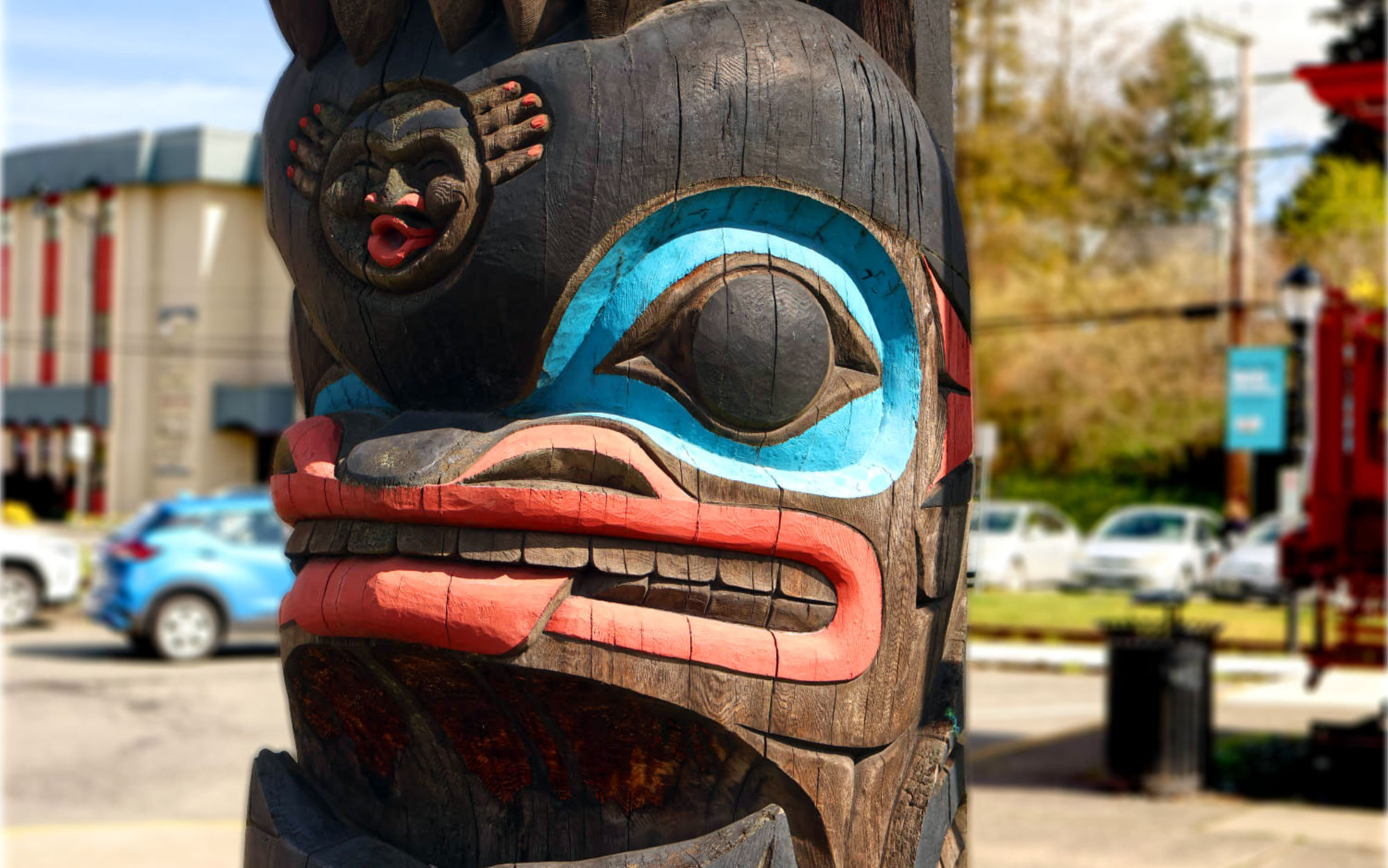
Today, Duncan has a large indigenous community and is the traditional home of the Cowichan Tribes, the largest of the Coast Salish people. The city is known for its collection of totem poles, one of the world’s largest. At one point there were 44 poles. One succumbed to a traffic accident, another was gifted to New Zealand, and another ‘returned to earth’. You can take a virtual tour and read all about the totems and their artists here: Totems Tour.
Petals
 Our visit took place on a bright, sunny spring day. We arrived just as the fruit trees came into full blossom. Pink petals littered the main street and parking lot. Swirling like snowflakes, apple and cherry blossoms are one of nature’s most joyful gifts. For me it is a reminder of springtime’s renewal and nature’s abundance, marking the turning point from winter’s drab towards spring’s colourful brilliance.
Duncan’s Totems Tour begins and ends at the erstwhile railway station. The station is now the Cowichan Valley Museum which is only open Thursday, Friday and Saturday during the winter. Summer in Duncan begins on June 15 and runs through September 14. Seeing as we were there on a Tuesday, we couldn’t do more than peer in the windows. The train tracks remain in place and run the length of the old line. It would be tempting to find a handcar and work your way north towards Campbell River or south towards Victoria.


Salish
 The tour was fascinating for someone with little experience with totems. Several themes soon became apparent: killer whales, ravens, salmon and thunderbirds figured prominently. The swirling lines of Coast Salish art were fully present. The author and sailor Jonathan Raban reflected on northwestern indigenous art in his excellent sailing travelogue and memoir, Passage to Juneau: A Sea and Its Meanings. The smooth, curved patterns that repeat so frequently in Salish art may, he believed, have been inspired by reflections in turbid pools of seawater as seen from an observer on shore. On calm days from his boat, he recognised on the water the familiar forms we saw in the totems. Given that everything in this part of the world revolves around the sea, it makes sense that water would inform local artists. At least it did to me when I first read it.
The Totem Tour wasn’t quite enough exercise for the three of us, so we headed south towards the Cowichan River and the park that runs for a kilometre or so alongside the water. With the river in full flood, we discovered the unpaved trail’s footbridge had washed away and instead rejoined the paved path. The park is popular with walkers and dog owners from the nearby residential neighbourhood. Canada’s Highway 1 passes over the river next to the park’s entrance. The bridge’s underpass was littered with itinerant oddments and old shopping carts slung around a couple of charred fire pits. On our return leg, we spotted a young punk emptying a shopping cart of cardboard, presumably for fuel. It felt for a moment a bit like being in Portland a few years ago.


