 Posted by

Position: 36° 59′ 4″N 7° 50′ 46″W
Over the last year we got pretty good at gunkholing around the Caribbean. Finding anchorages out of the way of local fishing boats, in the lee of impending weather, we’d hang off our all chain rode just to avoid paying for often unreliable mooring balls. Certainly, the idea of stopping at a marina for any longer than repairs dictated was to indulge in an increasingly rare luxury.
Fast forward to Europe where things are different. Cultures are shaped (in part) by their environments. Sailing tribes are particularly sensitive to winds, currents, and tides. Since we’ve been east of 10o west, we’ve spent much more time at the dock than on the hook. Here’s why:
- Geo-hydro-graphy: Practically any place exposed to the Atlantic in this neck of the world enjoys moderate to tremendous tides. Along the south coast of England, tides range anywhere from 15 to 45 feet over shallow ground. That means ‘drying’ harbours, i.e. harbors that drain completely, are a common occurrence. That’s good if you’re careening your boat and scraping off barnacles, but stinks if you draw 6 feet and don’t want to scratch your expensive Awlgrip paint job every 12 hours.
- Lee shores: Like the left coast of America, the left coast of Europe is dominated by westerly winds and the sea swell that goes along with them. Making things more challenging is the lack of sheltered bays and islands to hide behind. Dropping your anchor in anything but freakishly calm conditions makes everyone uncomfortable. Marinas are a safer bet. Yet, most harbours along the Bay of Biscay and coast of Portugal lie at the mouth of a river. Combine a strong westerly with a good swell and a rising tide against the river’s outflow and you have the makings of an often dangerously bouncy entrance or exit almost everywhere. Getting in and out demands close attention to marine forecasts and tides, as well as weather on shore (freak rainstorms turn rivers into torrents).
- Follow the money: This far north sailing has a fairly short season. Its peak is in July and August when schools break for summer holidays. Prices rise and moorings and berths are hard to come by. The seasonal tail starts in September and has its final wag by the end of October. Let’s put this in a little perspective. In summer you might pay €40-50 a day for a berth in a marina. By winter that price drops to €20 or less. At those rates with all you can eat electricity and water included, the convenience of hanging out at the marina becomes compelling.
Do we miss swinging off the anchor? Sometimes, but not a whole bunch. Our recent stop at the Island of Culatra, just south of Faro on Portugal’s southern coast, provided us with a sheltered anchorage and a short dinghy ride to the quaint and very active fishing village. During high season over 100 boats crowd the narrow river outside the harbor. We saw fewer than 15.
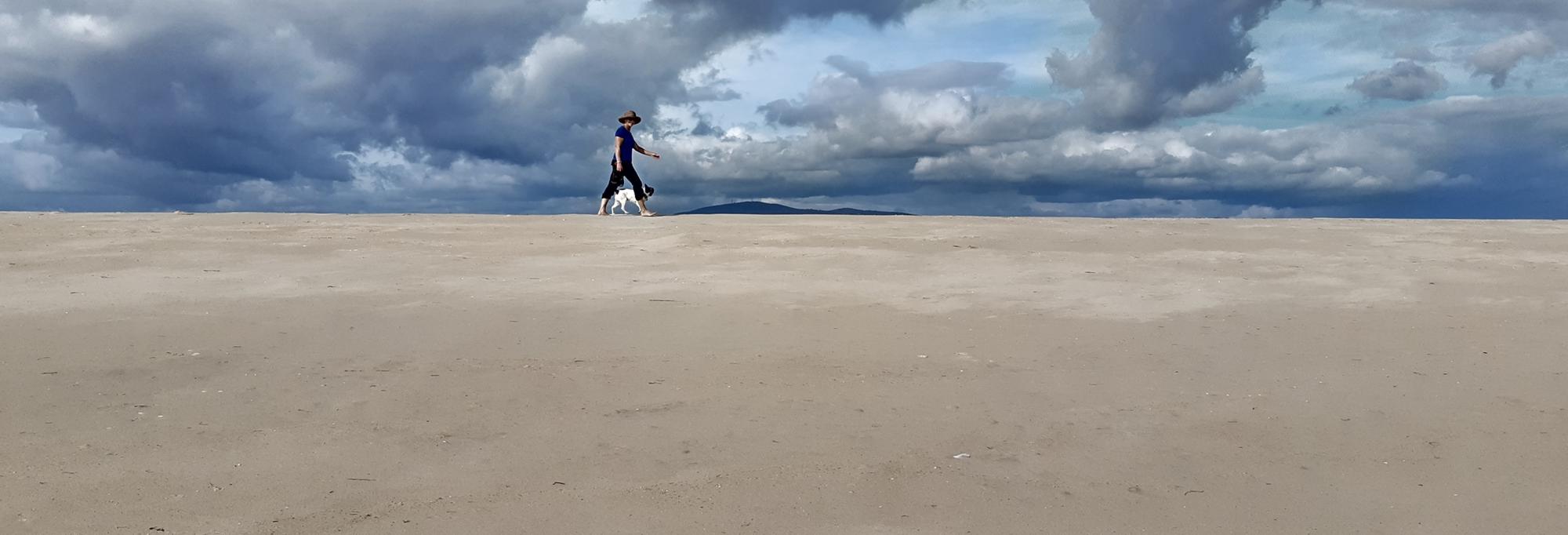
Aleta swung lazily for a couple of days during which time we wrestled Nelly back into the water and started negotiations with our outboard’s carburetor. Culatra is a big, beautiful sandbank lapped by clear blue-green waters and bound by strong currents. The long, white sand beach was almost empty as we hiked to the east end of the island and back. Jets landing at Faro airport disrupted our peace occasionally, but not enough to spoil things. It made for a welcome pause midway between Lagos and Gibraltar.


Outstanding pics
Thanks Brad! Sometimes I get lucky