 Posted by
Position: Once Around the Moon

It was one of my life’s greatest disappointments when Neil Armstrong and Buzz Aldrin decided they couldn’t sleep and instead walked on the moon five hours earlier than planned. That meant humans first walked on the moon on July 20, 1969, rather than on my birthday.
Over the years I have tried minimizing this loss by reminding myself it was July 21 in Singapore. Of course that didn’t help. According to an old silver spoon I have commemorating my mother’s hard work in ejecting me into this world, the time of my naissance was 17:05. Thus, it wouldn’t have mattered. I would still technically have been nine years old if Buzz and Neil had kept to their original schedule and moonwalked at 02:00 on July 21, 1969. Of course, my namesake Michael (Collins) was zipping around the moon in orbit while all that was going on. In a perfect ten-year-old’s world, Michael would have first stepped on the moon at 17:05 EDT and Buzz would have buzzed around waiting for Michael and Neil’s return.
Peace

Having spent my youth in the heat of the space race, the world’s response to the Artemis Mission has come as a bit of a surprise. Once Neil and Buzz walked on the moon and soundly beat the Soviets, the public’s interest in deep space missions fell away. The US Government decided to focus on more terrestrial challenges, like the war in Vietnam and domestic unrest, and the last Apollo Lunar Mission ended on December 19, 1972. Five weeks later America and Vietnam signed the Paris Peace Accord, officially ending the war. The last American combat troops left Vietnam in March of 1973. NASA had also cancelled Apollos 18,19 and 20. Southern rockers Lynyrd Skynyrd captured the zeitgeist when they sang later that year, “Too many lives they’ve spent across the ocean, Too much money they’ve spent up on the moon”.
As time seemingly rolls back to the 1960s, Americans find themselves once again embroiled in an overseas conflict of their own making and still find pride in leading the world (and communist China) in sending people into space. A modern-day Rip Van Winkle could be forgiven for waking up after 57 years asleep and thinking nothing had changed (except he would find a woman and a black man in the formerly all-male, all-white province of the Command Module). My enthusiasm for space flight is partly atavistic and partly genetic (my Uncle Hugh having been in the thick of things at Draper labs for most of the 1960s).
Space Lingo
It helps that astronauts use nautical terms to guide their ships. Terms like fore, aft, port and starboard, are part of the vernacular of spaceflight. Spaceships have captains that board through a hatch and sit at the bridge while the craft is being docked or moored. Heck, the word astronaut (with its Greek roots) literally means ‘star sailor’. Nautical terms work well at times when orientation quickly becomes discombobulated. Port and starboard always mean the same thing (left or right) when you’re facing the bow.
Crew

I have been taken with the personalities of the Artemis II’s crew, too. Mission specialist Christine Koch seems like a badass adventurer. Pilot Victor Glover is a fan of the incomparable Gil Scott Heron and listened to ‘Whitey on the Moon’ every week during training. Jeremy Hansen is a Canadian with a sense of humour. (I spent two of my formative years attending school in Canada.) Mission Commander Reid Wiseman is a father of two daughters and a widower. Hansen formally requested that a recently discovered lunar crater be named after Wiseman’s late wife Carroll. I would happily offer a berth on Aleta to any of these folks. Together they give every appearance of being a strong, cohesive team comfortable with group hugs. In the post-pandemic world, I think their camaraderie was part of the mission’s appeal.
Flying
Growing up I dreamt of flying airplanes, not rockets. In my late teens I learned that fighter pilots get rejected if their buttock-to-knee length is too long. In other words, my long femurs would get cut off ejecting from a doomed jet. By way of compensation, my femurs proved advantageous when hill-climbing as a cyclist. Being half blind in my right eye keeps me out of the cockpit. (Although, in truth, I haven’t tested that assumption, so it is just an excuse.)
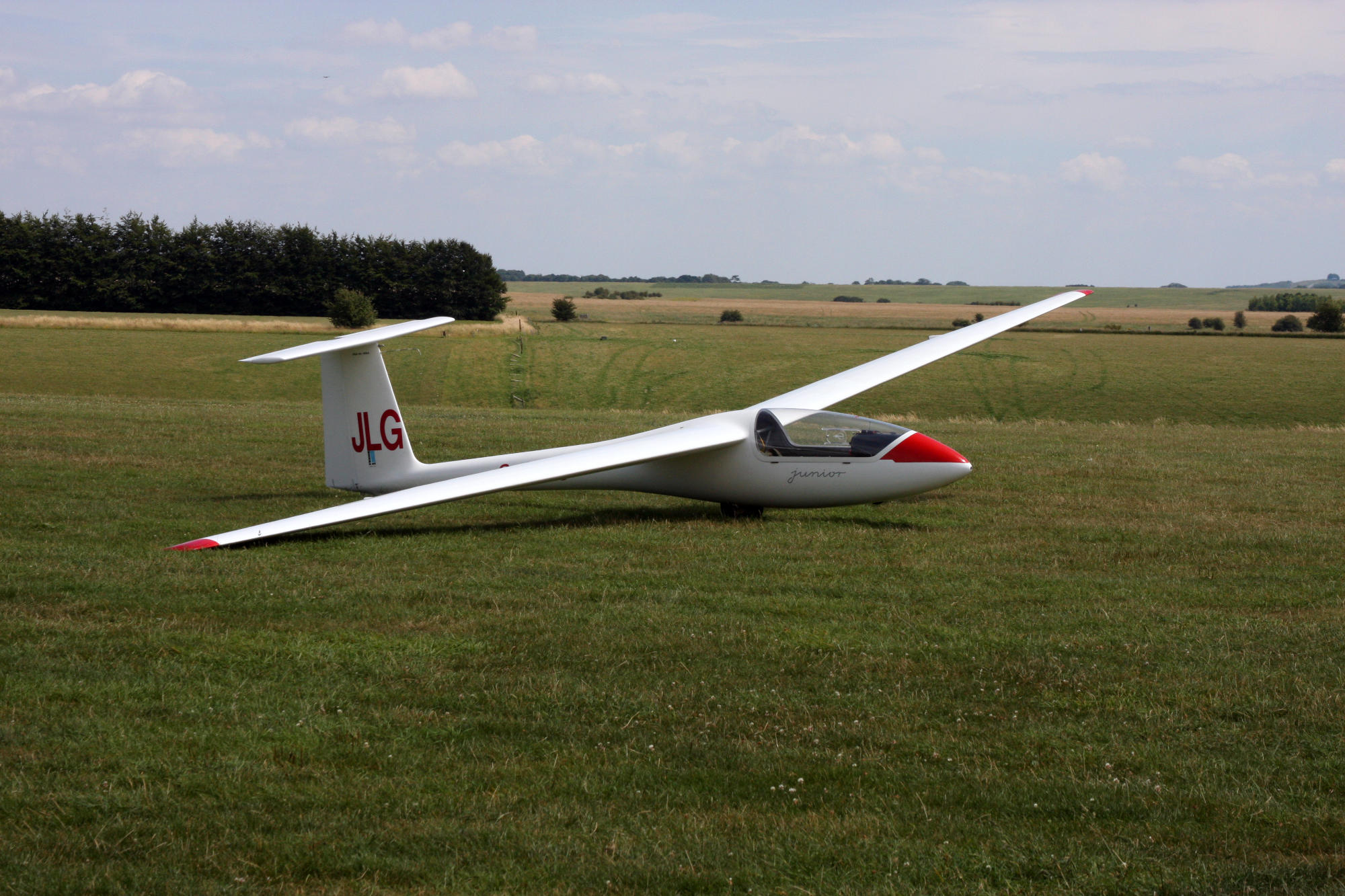
Fifteen years ago, I flew in a fixed wing glider for my first and only time. I was sorely tempted to pursue my license after that experience. Paragliding in Spain a few years ago similarly inspired me. These days I have accepted that my flying future will see me sitting in the back of an airliner as a passenger, or fiddling with the knobs on my drone’s control panel. Artemis was a gentle reminder of my 10-year-old’s dreams and all the things that might have been.


Hi Mike!
My, Oh my… And here I thought the Apollo 11 moon landing was
In commemoration of my 25th birthday, given that I had recently hired on with NASA Ames Research Center and, during my Senior year of Aerospace Engineering studies at the University of Colorado, I was the Swing shift Lead Environmental Test Engineer at the Beach Aerospace facility in Boulder, Colorado, which manufactured the Apollo Service Module’s Liquid Hydrogen and Liquid Oxygen tanks.
Nowhere near as significant a contribution to the Apollo program as your Uncle’s, however, it was my job to certify that the tanks could withstand extreme mechanical vibrations during launch.
Yes, these were the same type of tanks that precipitated NASA “Most Successful Failure” during Apollo 13, which you may have known about from Ron Howard’s movie of the same name.
To be clear, the failure of the liquid oxygen tank on Apollo 13 was traced to improper pre-launch preparation by the ground crew, not the certification of a defective tank by me (Tim tested tanks in 1966 and the Apollo 13 mission launched in 1970 – Ed),
And, Oh! I too, took my one and only glider flight on July 20th, 1984 ( my 40th birthday) from a Calistoga Field, which means that, you are, as am I, on the Tasty Crustacean (the word “Cancer” doth no pass our lips- Ed)/Leo cusp, which makes us fellow “Cuspids” (Or Cuspatoons” – Ed).
And, finally… You were 25 (my age on the Moon Land) at the time of my Glider Flight… Coincidence or ??? (Coincidence, for sure – Ed)
To Infinity and Beyond!
Tim
Thanks Tim! We are practically twins! Next time we’re in the pub and someone bets that two people in a room have the same birthday +/- a day, we can confidently bet our beer money. Good to know you weren’t the villain of Apollo 13, too.
Perhaps it’s time to design a beer for Cuspatoons. Something between a pilsner and a stout? A bridge too far?
Cheers!
MIKE
~~~~
As long as the IBU is 40+, I’m “on board”!
100%!