 Posted by
Position: 49°29’47.8″N 119°35’38.7″W

At the end of our house sit on Vancouver Island we could have headed straight south, or we could have arranged to meet our friend Tom in Penticton in the heart of the Okanagan Valley – Canada’s premier wine growing region. Given the alternatives, we opted for Penticton. Despite living in Washington State, a fine wine making region in its own right, Tom joined a couple of wine clubs in the Okanagan a few years ago. That gives him an excuse to scoot across the border every six months to retrieve his allocation. In our eyes that made him a local expert, and we looked forward to a bespoke tour of the area.
Dialling in Penticton from Tsawwassen on Google Maps sent us down to Douglas, just over the border crossing at Blaine. From there we headed east along Avenue 0 all the way to Huntingdon. Avenue 0 is the border between Canada and the United States. Step out of your car anywhere along its path and you risk tumbling down an embankment and entering America illegally. Here and there we saw Customs & Border Protection-liveried Ford Explorers parked on dead end streets and keeping an eye on things. Mostly the roadside was trees and fields and hidden cameras. Occasionally a house butted up against the 49th parallel. If I lived there, I guess I’d get used to the idea that a poorly tossed frisbee might end up as a cross-border incident.
Slide

At Abbotsford we picked up Canada Highway 1, taking it as far as Hope. There we headed east along Highway 3 through the Sunshine Valley and the rolling hills of the North Cascades range. Hope is the site of the largest landslide in Canada. In the wee hours of January 9th, 1965, an avalanche blocked the Hope-Princeton highway, just outside town. A line of motorists waited for crews to come and shift the snow. At 6:58AM an earthquake shook the area and half of Johnson Peak sheared off and fell directly into the avalanche area below. Some 47 million cubic metres of rock, mud, and debris up to 500’ deep smashed down, displacing a lake along the way.
Boulders the size of houses tumbled down like quarter-minus gravel burying a 3.5 km stretch of highway. Four motorists were killed. If the avalanche hadn’t preceded the slide, the death toll might have been higher. Almost immediately work began on carving a new route through the rubble. In less than two weeks of continuous work, repair crews had re-opened the road. Later, in the 1980s the highway was relocated away from the slide. We learned all this from an informational billboard at a nearby rest stop.
The drive along Highway 3 twisted and turned through the rocky slopes and treed valleys. Late afternoon sunshine broke through the clouds and kept us company along the way.


Penticton

Penticton straddles an isthmus between Okanagan Lake and Skaha Lake and makes a credible claim as the beating heart of Okanagan Wine Country[1]. In summer, tourists flock here in RVs, cars, buses, trains and airplanes. That means there are plenty of bed and breakfasts and RV parks to choose from during the off season. The Okanagan Valley sits in Canada’s only desert and gets about 10 inches of rain annually.
The last time I drove through Penticton was in the middle of August. It was 98F in the shade and I was riding my motorcycle towards Prudhoe Bay, Alaska. There are few things less sticky than sitting in a traffic jam atop a hot, three-cylinder motorcycle in full riding gear. Motorcycling in hot weather isn’t bad as long as you’re moving. Teenagers in flip-flops and halter-tops strolled by making me feel seriously overdressed. If you’re riding, I recommend a white helmet for reflecting sunlight and to make it easier for other drivers to spot you.
Bench Marks

The brilliantly sunlit road leading out of Penticton heading towards Naramata runs along a west-facing bench. The endearing term ‘bench’ indicates an area of flat land with steeper land above and below it, running along a valley. Formed by a glacier, the Naramata Road stretches along the Naramata Bench with vineyards and cideries lining both sides of the road.
Thanks to Tom’s careful guidance, our first stop was at the Upper Bench Estate Winery and Creamery. Not for wine, but for cheese. At least a half dozen varieties were on sale, including Double Cream Brie, Grey Baby, Moody Cow, and Okanagan Sun, each of which we bought a small wheel of. After some thoughtful digging by Gemini AI, we learned cheeses aren’t generally restricted when bringing them across the border. That meant Tom’s wife Joanie was in luck.
Cold Snap

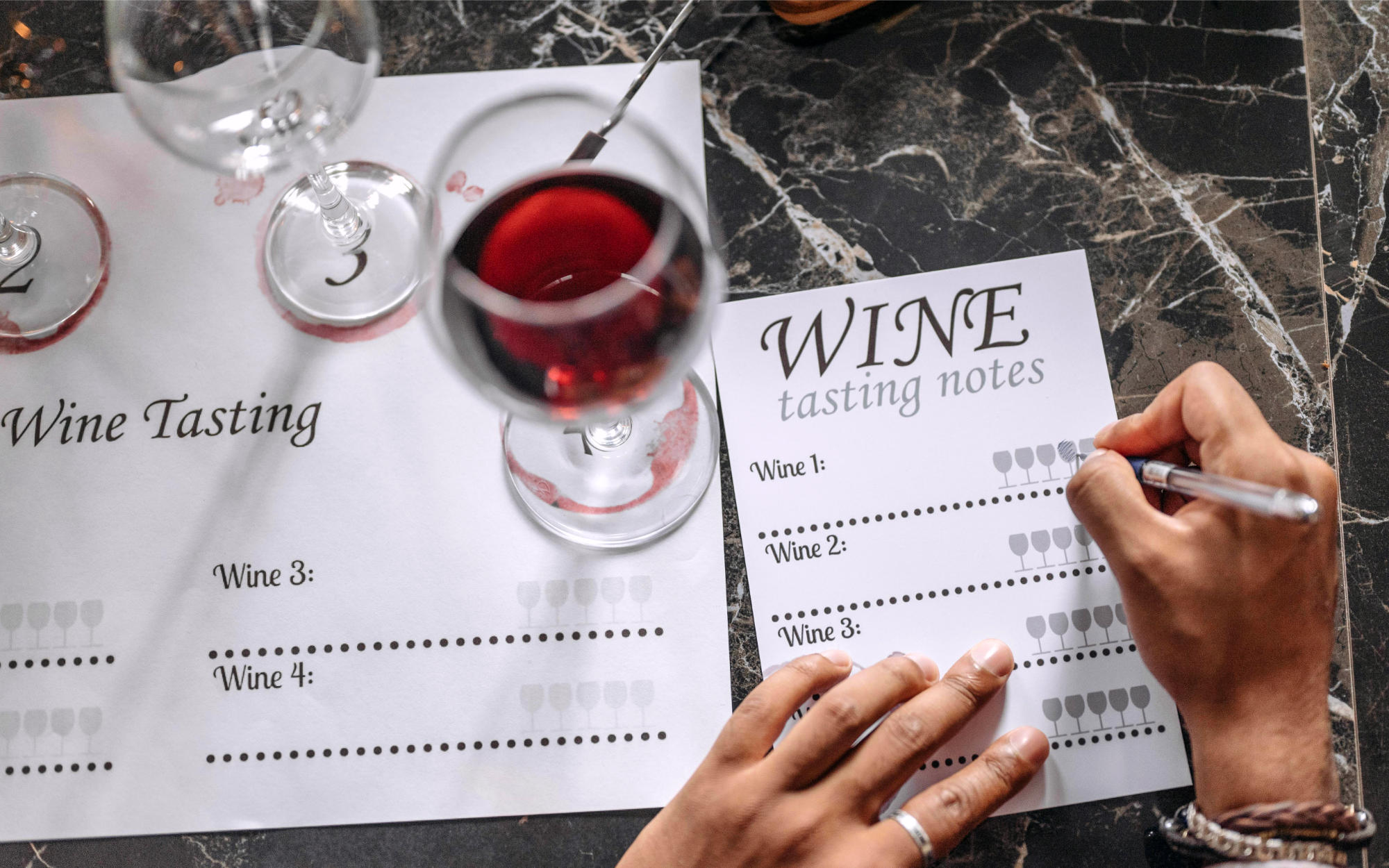
For some reason (probably based on Tom’s extensive experience) we didn’t taste Upper Bench’s wines, but instead drove 500’ north and pulled in at Roche Wines. Roche was new for Tom, but of the half dozen tastes we shared, we chose a bottle of Chardonnay Tradition to bring back with us. Our server told us the tale of the 2024 freeze that all but wiped out the region’s entire grape crop. In January 2024, a deep cold snap (-20sC/F) froze the budding vines and destroyed 97% of the fruit. The price of local grapes skyrocketed, and vintners wound up sourcing grapes from growers in Washington and Oregon who were, happily, having a bumper year. The upshot is, most vintages from 2024, while made in Canada, largely relied on American grapes. In fact, many local vintages, particularly blended wines, rely on American grapes.

What doesn’t rely on American grapes are local ciders. La Petite Abeille grows its own fruits and creates some of the best effervescent and sparkling ciders in the world (IMO). Their creativity and focus on quality have earned this little outfit a dedicated following. They even created a Vermouth based on heritage cherries. Combined with our recent discovery Empress Indigo Gin, all we needed was a splash of Campari for a perfectly wonderful Negroni. We did not leave Little Bee empty handed. We even had to stop ourselves, so we didn’t blow our budget in one place.
The Grape Leaf Café in Naramata makes excellent sandwiches served on homemade focaccia bread and accompanied by equally good coffee. Based on the clientele, the café caters to as many locals as tourists. Service was very quick and everything was delicious. Given the US/Canada exchange rate, prices were reasonable, too.
Bench 1775
About halfway between Naramata and Penticton you’ll find the Bench 1775 Winery. It overlooks long sloping hills with rows of vines that seem to stretch all the way down to the lake. 1775 gives the impression of a big corporate California style winery. The tasting room was spacious; its walls stacked high with bottles for sale. With the bright sun and afternoon’s warmth coming on, we hoped to sit outside and admire the view. But the adjoining patio was closed until June. No one knew why. We came away with the feeling that their reds are better than their whites, but otherwise uninspired.
Noble Bubbles

Back on the wine trail, we headed ten miles south of Penticton to Noble Ridge Vineyard and Winery, one of Tom’s clubs. We arrived about 15 minutes before the tasting room closed but got a pass anyway. Our server, an experienced hotelier and tour guide, loved to chat and gave us the full tour, elaborating on each wine with enthusiasm. Noble Ridge is known for its sparkling wines. The rosés are very drinkable, too. We bought a couple of each.
Sparkling wine in the Okanagan has shifted from a niche product to one of the region’s fastest-growing categories. The combination of climate (cool), terroir (naturally acidic) and investment (money) has transformed British Columbia’s sparkling wines into a product that may, soon, define the region.
Hester Creek
With a long-ish drive the next morning, we decided that we had time for one more tasting between breakfast and the border crossing just before lunch. With this prudent approach to wine-maxxing we found our favourite vineyard of the trip. In general, or at least in April, the wine tastings we enjoyed were free if you purchased at least one bottle. This seemed enticingly old-school and, in this day and age, even generous. Among Hester Creek Winery’s curiosities was a very tasty Trebbiano. A varietal, while widely planted, is accused of delivering ‘undistinguished’ wines. Grown on some of the founder’s original vines, we found the wine went down well and was different enough to be satisfying and distinctive. Perhaps our experience in Portugal, where varietals make up so much of the crop, allowed our taste buds more wiggle room than we might have given a chardonnay or sémillon.
Our impulses got the better of us and we bought several reds and a couple of sparkling wines that we will enjoy at our leisure. The only remaining challenge was getting out of Canada and following Tom across the border.
Osoyoos

Customs and immigration live for the words, ‘Anything to declare?’ Not wishing to disappoint them, we came clean and let them know exactly how many bottles we had purchased. A security officer immediately pulled both cars over and asked us to follow another officer through the building to the payment station. I think our collection, just shy of a couple of cases, came to a grand total of $23. Not much given how many people were involved in taking our money. But I think his American majesty’s government wants every farthing of revenue it can get these days. After all, there is a war on.
Continuing south through the American side of the Okanagan Valley was simply beautiful. Fruit trees, apples and pears, stood in neat rows up from the river to the roadside bursting with delicate pink and white blossoms. Gentle bends in the river follow the swales and bluffs of the valley walls. At Lake Pateros the Okanagan River joins the Columbia River. A few miles south of the merge, Wells Dam has an attractive rest area chock full of dam trivia and historic dam facts. It also has fast electric vehicle charging stations for Tom’s Rivian. The dam sits at a quiet bend in the river with clear sight lines to the north and south. It is a good place to stretch your legs and learn a little about dam technology and dam fish ladders. (Dammit! That’s enough! – ed.)
[1] The much smaller town of Oliver, BC, nominated itself the ‘Wine Capital of Canada’.


As always, entertaining + informative = engaging
Thank you Michael! You are a gentleman and a scholar!
Always lovely to hear your adventures👍😍
Thanks Annette! I hope spring has sprung on Guernsey, too!