 Posted by
Position: In a clinch

This post will come as something of a non-sequitur. But we’re not above that on this blog, now, are we? Having been back in North America for the past six months, I can’t help but notice that people are much huggier than they used to be. In the past hugs were normally reserved for family members at seasonal gatherings. Pre-pandemic greetings typically followed the somewhat Puritan norms of a handshake and a how-de-do? French bisous, an air kiss on two or three cheeks, were only occasionally and often ironically proffered. Post pandemic, after a famine of human contact, hugs are more common than ever.
Today hugs have been normalized among friends and acquaintances of any gender. I think this is a good thing. As a lay observer of human biology, I know the value we instinctively put on closeness. Humans gain so much more information about each other from being touchy (in appropriate ways) than they do over a Zoom call. There’s no substitute for rubbing shoulders with your colleagues if you’re trying to get things done. Bonds of trust get reinforced and people generally behave better when they come together. Hugging also strengthens our immune systems. Which may, in time, prove that hugging is part of our subconscious drive for survival.
Back to Work
Companies forcing their employees back into the office probably care less about the potential benefits to our species than the ROI on their leaseholds. Nevertheless, sitting around the breakfast table the other day, the conversation turned to touch. My first objective introduction to the topic of touch came with the birth of my eldest daughter, Katie. She arrived small for dates and six weeks early. Her mother, Wendy, was a neonatal nursing tutor and fully understood the needs of preemies. Wendy had had preeclampsia (very high blood pressure brought on by pregnancy) and in the unenlightened German maternity hospital where Katie was brought into the world, mother and daughter were to be treated separately. Wendy on the ward and Katie in the Neonatal Intensive Care Unit (NICU). My instructions were to visit Katie each day and to be sure to have direct contact with her, to stroke her. It’s important, Wendy admonished me. I did as I was told and within a few weeks mother and daughter were thriving.
Celebrating the Fourth

With a little research I know now that we had, en famille, entered the ‘Fourth Trimester’, the point at which preemies enter what has become known as Kangaroo Care. It turns out that our need for touch begins as soon as we enter the world. In fact, it is the first sense we develop in utero. Transitioning from the warm, cosy, climate-controlled environment of the womb into the bright, noisy, world of clinical care is a massive shock to the system. Kangaroo Care is based on bare skin-to-skin contact between parent and newborn and becomes a biological stabilizer.
When a baby is placed bare-chested against a parent’s chest, magic happens—their vital signs physically sync up:
- Temperature Regulation: A mother’s chest can dynamically warm up or cool down to match exactly what her baby needs.
- Heart and Lung Stability: The contact steadies the infant’s respiratory patterns and heart rate, tuning oxygen levels perfectly.
- Fuel Conservation: Feeling physically secure stops the baby from panicking and burning through precious blood sugar reserves.
- Microbiome Seeding: Hugging a baby bare-skinned coats them in healthy skin bacteria, training their brand-new immune system to fight off bad bugs.
Bogota

Today this may seem completely instinctual, but until the late 1970s the standard of hospital care was for parents to be treated as visitors and their baby housed in a separate room, behind glass walls with strict visiting hours. That all changed in 1978 when a hospital in Bogotá, Colombia, faced a devastating shortage of incubators and a flood of premature infants. The hospital’s death rate for infants one kilo or less was nearly 100%. Out of pure necessity, doctors instructed mothers to hold their diaper-clad babies against their bare chest night and day, letting the baby breastfeed at will.
The results upended everything: infant death rates plummeted, infections nose-dived, and babies were discharged much faster. In 1985 a group of British researchers travelled to Bogata and confirmed the clinical results. Their findings were published in the medical journal, The Lancet. As a result, this low-tech miracle forced Western medicine to completely rewrite hospital protocols, transforming parents from restricted visitors into essential, primary caregivers. Having taught at University College Hospital in London, one of the UK’s best NICUs, Wendy was fully aware of these innovations. Hence my clear instructions. To this day, I can’t imagine how frustrating it was for her to deal with the seemingly medieval approach of her caregivers during Katie’s birth.
Biology
Our need for physical connection doesn’t go away when we get older. As adults we possess a network of nerve fibres called C-tactile (CT) afferents. These nerves form an emotional wire and respond to slow, gentle skin-to-skin stroking. Poke them or tap them and they won’t respond. For the technically minded, stroking at a speed of 1 to 5 centimetres per second is perfect. That is the exact pace of a natural loving caress or a comforting hug. You already know how to do this. When triggered, these fibres completely bypass the brain’s logical and analytical areas and head straight to the zones that process emotion.
What areas are we talking about? The Upper Back and Shoulders: This area features a high density of CT fibres and is structurally designed to receive social touch (like a comforting arm around the shoulder or a reassuring pat on the back). The Forearms (Outer Side): The hairy, extensor side of your forearms is incredibly sensitive to slow, sweeping strokes. This is why holding someone’s arm or casually caressing a partner’s forearm feels instantly soothing. The face and neck: The cheeks, jawline, and the back of the neck are packed with CT fibres. Because these areas are physically close to the cranial nerves and major blood vessels, touch here provides an incredibly rapid pathway to down-regulating stress.
Physiologically, our response to touch is to lower blood pressure and reduce resting heart rate by slowing down sympathetic nervous system activity. Cortisol (the stress hormone, which otherwise suppresses immune function) levels drop rapidly. Regular positive touch is linked to increased cellular immunity, and releases a chemical cascade of oxytocin, dopamine, and serotonin, mitigating symptoms of anxiety and loneliness.
Back Off!

Normally, if a stranger walks up to you and slowly strokes your arm at three centimetres per second, your brain perceives it as a boundary violation or a threat. Your amygdala fires, cortisol spikes, and you enter a fight-or-flight state. Thus, contextual framing and permission play a vital role in our response.
Going for a massage is a good way to get all the benefits of CT fibre stimulation. The reason this works is through contextual framing. Because you are in a professional environment, have given explicit consent, and expect a therapeutic treatment, your brain reinterprets the stranger’s touch as beneficial, not an attack.
As Carol’s masseuse, I have the advantages of implicit permission and her loving trust. Our relationship, therefore, more than makes up for any lack of skill or technique on my part. Her cognitive brain reassures the nervous system that the interaction is safe. With threat assessment switched off, the CT fibres are free to do their job, processing our physical contact as pure safety, comfort, and physiological peace.
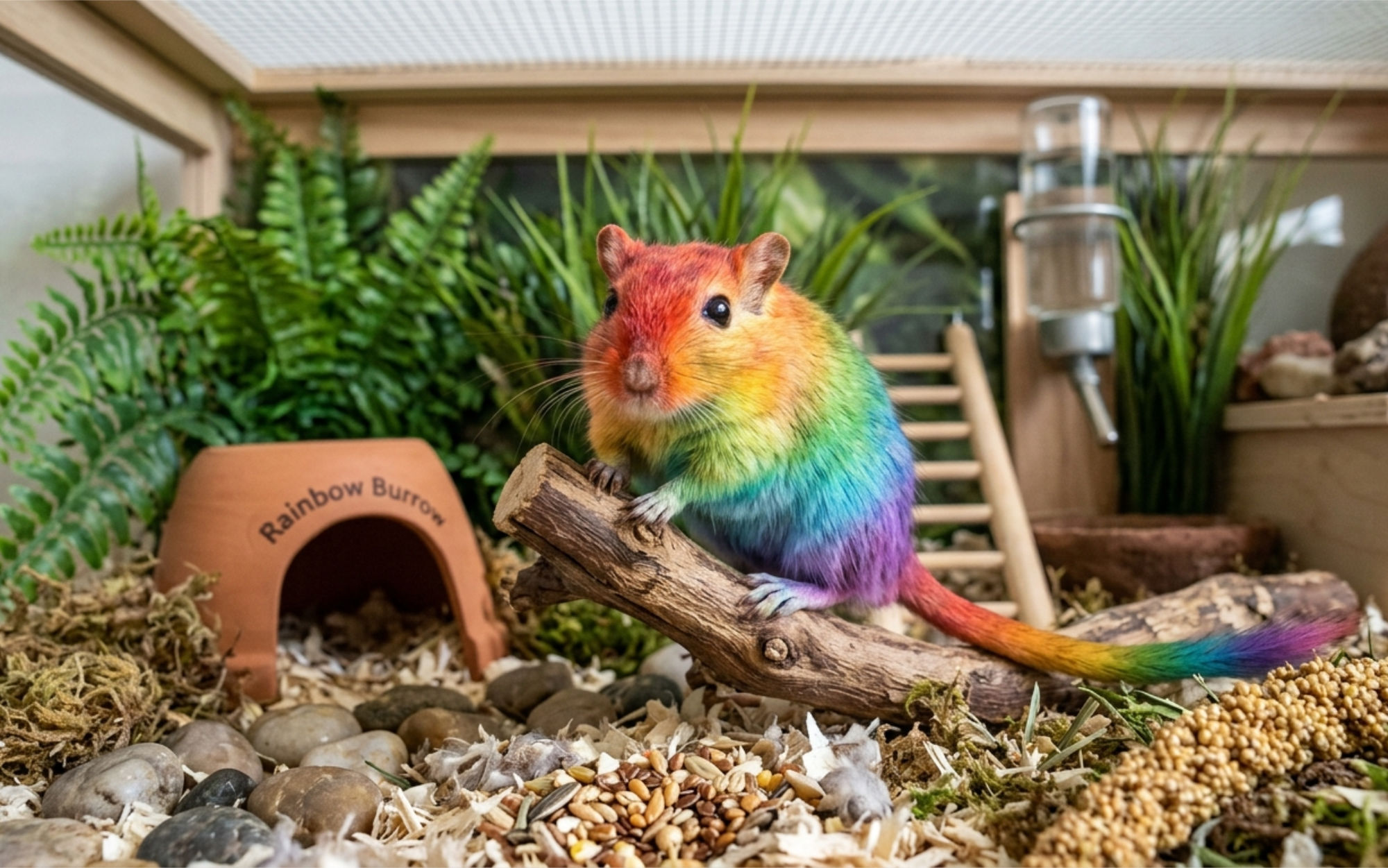
Years ago, when Carol would put elder kid Tai down for bed, she would settle them down with a story and a back rub. Carol would ask Tai what they were going to dream about and one night the answer was, ‘rainbow gerbils’. Ever since then, back rubs with mom became known as rainbow gerbils. Now you know, you can always ask Carol for rainbow gerbils. I won’t speculate on her reply, since you may well have triggered her amygdala.
Swimming

Aside from the frisson of mischief, skinny dipping stimulates the CT system in ways that are consistent with caresses. Swimming partially clad will also yield benefits, but naked is best. You are after all, laying your naked body on Mother Nature’s chest.
When you stimulate CT fibres via the continuous glide of water, like a caress they send signals that down-regulate the sympathetic nervous system and ramp up the parasympathetic nervous system (which controls rest, recovery, and homeostasis).
In swimming, this neurochemical calming effect combines with hydrostatic pressure, i.e. the physical weight of the water compressing the body. This dual-action input mimics the grounding sensation of deep pressure therapy (like a weighted blanket), drastically reducing baseline cortisol levels.
The Catch
The catch is temperature. CT fibres are highly tuned to temperature. In cold water the body focuses on temperature regulation and overwhelms the body’s response to CT stimulation. Warm water (34C and above) makes for profound relaxation and emotional soothing. Much the way a warming mattress does during a massage.
Touch Starvation
What happens when we don’t get enough touch? Psychologists call it “touch starvation” or “skin hunger”. Because humans are social mammals, going long periods without physical contact signals to our evolutionary brain that we have been isolated from the safety of the tribe. This triggers a chronic, low-level fight-or-flight response. Over time, skin hunger leads to spiked anxiety, broken sleep, and a weakened immune system. A Zoom call just won’t cut it. Which brings us back to why I think we’re hugging more than we used to. We are talking about the survival of our species, after all.
If you don’t have someone to hug, consider getting a Swedish massage[1] or going for a swim. Dogs can be good proxies, too. If you’re fortunate enough to have someone to hug, consider giving them a longer hug. Instead of a fast, distracted hug when you get home from your errands, commit to a 20-second hug while you both slowly sweep your hands down the other person’s upper back at that three centimetres per second pace. The combination of chest pressure and slow back stroking forces both of your nervous systems, like magic, to dump stress and flood your brains with joy. The future of humanity is in your hands.
[1] Swedish massage concentrates on long strokes, rather than digging deep into tissues like Shiatsu does. Both are beneficial, but Swedish massage’s long, sweeping strokes (called effleurage) naturally move at about 3 centimetres per second, perfectly matching the speed, warm temperature, and hairy skin geography where CT fibres live.


For me the hug is a quick way to make sure someone isn’t wearing a wire.
Hah! Or a chance to disarm them, figuratively and literally…
Our sweet Koret kitty Genie recommends 2cm/sec as the PUR-R-R-R-R-fect stroke velocity…
Cats are excellent teachers! And so wise!