 Posted by
Position: 60°10’56.7″N 149°38’25.5″W
After learning that the US Fish and Wildlife Service maintains Deadman Lake, a free campsite just over the border in Alaska, we headed there with all possible haste. Despite the incongruity of his Mohawk hairstyle, the US Border Patrol agent couldn’t have been more welcoming as we crossed back into the United States from Canada.
Like the National Park Service, the USF&WS is a part of the Department of the Interior. We have a senior lifetime pass for access to everything under their aegis. Honestly, that pass is one of the great bargains and a good reason for growing old. It also gets us a 50% discount on paid campsites and has paid for itself many times over. Deadman Lake has no fresh water and lots of bugs, but we couldn’t beat the price or the view.
Fairbanks
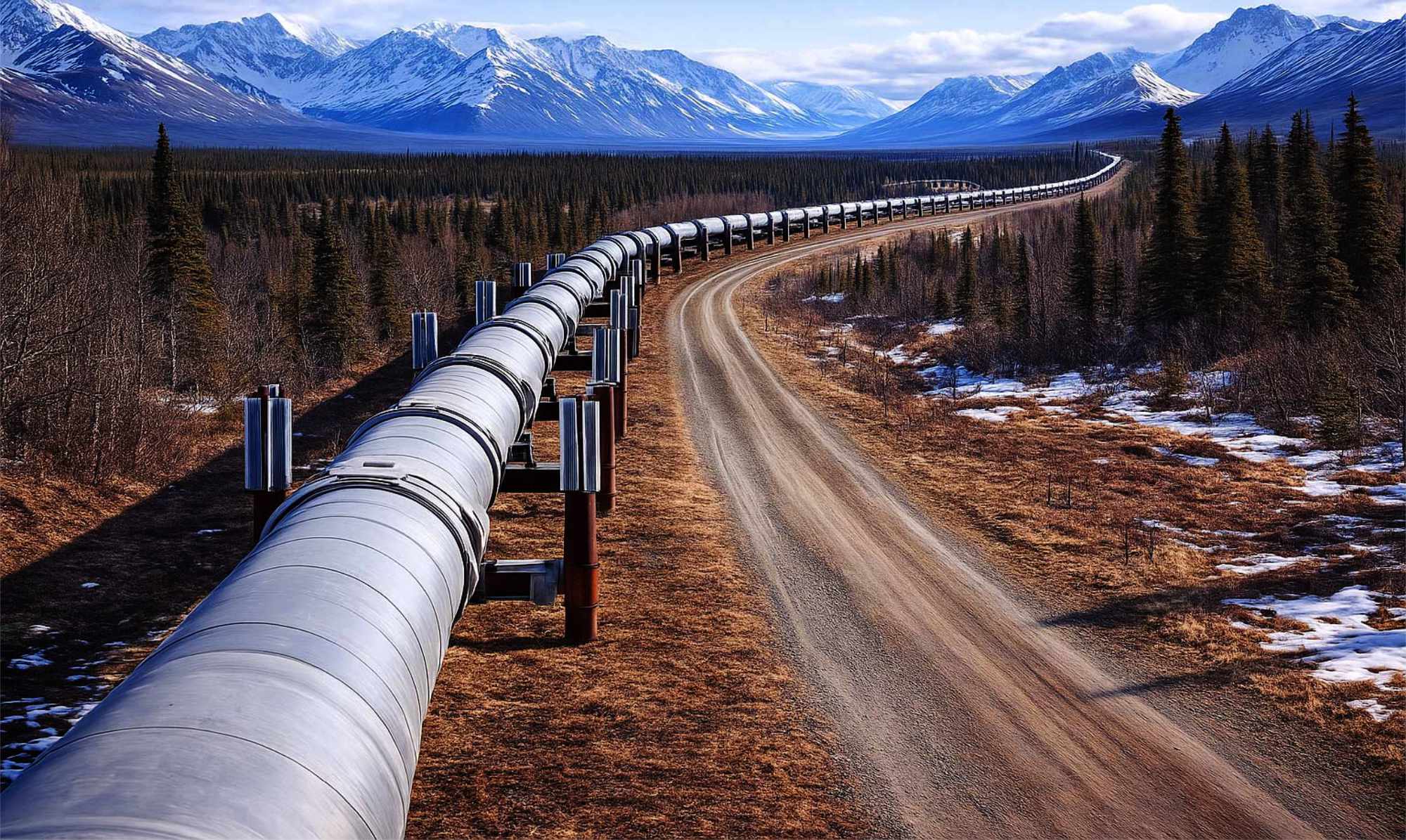
Alaska’s second city is Fairbanks. Originally a trading post, Fairbanks grew during World War II and the through the Cold War as a staging site for the construction of military depots across Alaska. Later, when oil was discovered in Prudhoe Bay, the city became the nexus for everything Trans-Alaska Pipeline related. That included entertaining workers on their days off and gave the city a boomtown vibe during the 1970s. No surprise then, that Fairbanks is the starting point for motorcyclists riding up the Dalton Highway to the furthest point north on any American road.
Having completed a motorcycle trip from Fairbanks to Prudhoe Bay, Carol asked me if the drive would be worthwhile? My assessment was that the unpaved road might be more mechanically risky and uncomfortable than beautiful. But you get bragging rights and the north side of the Brooks Range is one of the prettiest, most ethereal places I have ever seen. Daylight at 70o north latitude is evocative, no matter what time of day it is. Here is a video I took riding over the Atigun Pass in 2014 that might give you a sense of the roads and scenery.
On the Road
Our assessment, then, of Fairbanks is that it is mostly a place for a rest, a beer and a jumping off point for other parts of the state. As if to reinforce this bias, the Walmart in Fairbanks is the largest single retail space either of us has ever seen. It felt as though if you couldn’t find what you needed there, it wasn’t available anywhere in the state. Our next stop was camping in Denali (q.v.) for three nights and then heading south for Homer (q.v.).
On our way south we stopped at the Chugach National Forest’s Williwaw campground. As an aside, the National Forests are run by the US Department of Agriculture. The purpose of the national forests is to grow trees sustainably, as a cash crop. Hence its USDA jurisdiction. I believe it was Bill Bryson who said the main role of the National Forest Service is to build roads (so that trees can be extracted). Camping and conservation in the NFS come a distant second or third on their list of things to focus on. Still, the Williwaw campground was clean and tidy and had several trails nearby with vanishingly few bears. Sadly, the visitor’s centre is only open Thursday through Sundays during the summer. A pity, because people recommend visiting it.
The Chugach NF covers nearly 7 million acres. You could simultaneously fit Rhode Island, Delaware, and Connecticut inside the Chugach with room to spare. That’s a lot of trees and dirt roads. The forest surrounds Prince William Sound and is very mountainous with lots of glaciers and expansive views.
Seward

A couple of days after visiting the bears in Katmai, we found a spot at the Trail River campground about 25 miles north of Seward. In Seward, Carol had signed us up with Major Marine Tours for a whale/glacier watching tour that would take most of a day. And we got lucky. On our six-hour boat ride we spotted porpoises, orcas, humpbacks with babies, and otters, and sailed satisfyingly close to the Holgate Glacier, too. The weather was ideal with clear, sunny skies. Although it took a while to board, the ship felt surprisingly uncrowded with plenty of room to move about. Our captain clearly enjoyed his work and did a fine job narrating the journey without being obnoxious about it. At the glacier, the staff pulled aboard some of the floating glacial ice and offered drinks. There’s nothing quite as refreshing as wild caught 400-year-old ice.
Much like Homer, Seward was thronged with tourists. The harbour is well protected and filled with fishing boats and a few sailboats. With a little research, I learned Homer’s weather is generally much more pleasant than Seward’s. A large mountain range south of Homer acts as a rain shadow, while Seward is up a long fjord that traps any moisture, fog, sleet, or rain that flows in off the sea. That means Homer gets less than half of Seward’s 68 inches of annual rainfall. Seward’s pubs are decorated with natural wood and feel warm and cosy as a result.


Exit, Stage Left
Not far from Seward and our campsite was the Kenai Fjords National Park and Exit Glacier; one of the few glaciers you can drive to. An informative nature centre orients you to the glacier and the speed at which it is retreating up the mountainside. Walking towards the trail, signs every few hundred yards indicate how far down the valley the glacier used to reach. We hiked up as far as the first overlook point and then out onto the riverbed. The cerulean depths of ice are plainly visible. Walking across the glacier is tempting, but I would want a skilled guide to lead me around the crevasses.


Weather was coming in and three days of rain threatened. Cowards that we are, we bundled everything into Molly and pointed her back towards Anchorage and Wasilla with a goal of reaching Valdez once the depression had passed. Our Airbnb gave us a chance to do laundry, get washed up and find a couple of nearby hiking trails when the weather allowed.
Driving east across the northern side of the Chugach National Forest, Alaska’s Highway 1 follows the Matanuska River. The valley cuts deep at points and the views from the roadside are nothing short of amazing. About halfway along, you get a fantastic view of the Matanuska Glacier as it slowly retreats leaving grey washed gravel in its wake. At Glennallen, Highway 1 heads north and the Richardson Highway (4) runs south.
When you reach Glennallen, buy gas. There’s not much of anything but wilderness for the next 120 miles. The Richardson rises slowly into the mountains up to Thompson Pass (2,678’), the snowiest point in the state. Tompson’s weather station averages 500 inches (13 metres) of snow annually. The highway was originally built as a pack trail for the Klondike Gold Rush, taking stampeders all the way from Valdez to Delta Junction and then to Eagle City and the Yukon River. It later connected to Fairbanks.
Valdez

Like Seward, Valdez dangles at the end of Alaska’s supply chains. Safeway remains the main source of groceries in the town. A couple of other outlets appear to get their inventory from Costco and resell it. If it weren’t for Alaska’s marine highway, Valdez might run out of supplies altogether in the dead of winter. Annual snowfall reaches 300” in town and the passes leading down to the city are regularly blocked.
Just back down the road from the Valdez Glacier campground, you can hike the last vestiges of the original Klondike trail. The Keystone Canyon pack trail takes you to Bridal Veil Falls around a tall bluff at the final bend of the Lowe River. The winding trail leads uphill through old forests and babbling brooks. Informational signs recount stories that put you in the mind of a late 19th century prospector. Like with most fads, profits in the gold rush were captured mainly by equipment suppliers, not diggers. I suspect the same will be true of the Artificial Intelligence goldrush that’s currently underway.
Given its lack of accessibility, Valdez is astonishingly expensive. In the height of summer, a room at the Best Western can run $400 and more per night. Food was at least twice the price of Anchorage. And even though this is the far end of Alaska’s oil pipeline, gas prices were almost a dollar more per gallon. Fortunately, the local brewpubs sell beer at more reasonable prices. We recommend Valdez Brewing for its beer and dipsomaniacally friendly opening hours.


